-
Project1. Alarm clockOS/Pintos 2021. 12. 28. 00:22
alarm : 호출한 프로세스를 정확한 시간 후에 다시 시작하는 커널 내부 함수
핀토스에서는 알람 기능이 busy waiting을 이용하여 구현 → sleep / wake up 다시 구현
busy waiting : thread가 CPU를 점유하면서 대기하고 있는 상태, CPU자원이 낭비되고, 소모 전력이 불필요하게 낭비될 수 있다.
💡 컨셉!
깨어날 시간이 아니면 양보, 애초에 양보할 일을 안만들면 되지 않을까? → 별도의 리스트를 마련해서 CPU가 잠자고 있는 애들 모아놓기!
✅ 수정해야 할 주요 파일 :
include/threads/thread.h, threads/thread.c, devices/timer.c
✅ 수정 및 추가해야할 함수
void timer_sleep (int64_t ticks) /* 인자로 주어진 ticks 동안 스레드를 block */ void thread_sleep (int64_t ticks) /* Thread를 blocked 상태로 만들고 sleep queue에 삽입하여 대기 */ void threae_awake (int64_t ticks) /* Sleep queue에서 깨워야 할 thread를 찾아서 wake */- Ready_list : CPU를 기다리는 쓰레드들의 배열
- 새로운 쓰레드는 리스트 맨뒤에 추가(list_push_back())
- timer_sleep()
- 현재 busy waiting으로 구현되어 있음
- thread_yiedld()를 통해 CPU를 양도
- 주어진 tick 경과 후 Ready_list에 삽입된다.
- 전달된 tick의 만큼 loop 기반 waiting
void timer_sleep (int64_t ticks) { //ticks : 자고싶어하는 duration int64_t start = timer_ticks (); ASSERT (intr_get_level () == INTR_ON); while (timer_elapsed (start) < ticks) // <- busy waiting 유발 깨워야할 시간이 안되었으면 계속 양보를 하고 thread_yield (); //자기가 점유하고 있던 CPU에 대한 권한을 양보 하는 과정 thread_sleep(start + ticks); }-
- thread_yield() : CPU를 양보하고, thread를 ready_list에 삽입
- timer_ticks() : 현재 진행되고 있는 tick의 값을 반환
- timer_elased() : 인자로 전달된 tick이후 몇 tick이 지났는지 반환
- CPU를 양보하고, thread를 ready_list에 삽입
void thread_yield (void) { struct thread *curr = thread_current (); enum intr_level old_level; ASSERT (!intr_context ()); old_level = intr_disable (); if (curr != idle_thread) list_push_back (&ready_list, &curr->elem); do_schedule (THREAD_READY); intr_set_level (old_level); }- thread_current() : 현재 실행 되고 있는 thread를 반환
- intr_set_level(old_level) : 인자로 전달된 인터럽트 상태로 인터럽트를 설정하고 이전 인터럽트 상태를 반환
- do_schedule() : 컨텍스트 스위치 작업을 수행
- list_push_back(&ready_list, &cur→elem) : 주어진 entry를 list의 마지막에 삽입
- intr_disable() : 인터럽트를 비활성하고 이전 인터럽트의 상태를 반환
😎 Alarm clock 솔루션!
- Sleep/wake up기반의 alarm clock 구현
- Sleep queue의 도입
- Sleep된 thread를 저장하는 자료구조
- timer_sleep()을 호출한 thread를 저장
- 수정
- loop 기반 wait() → sleep/wakeup으로 변경
- timer_sleep()호출시 thread를 ready_list에서 제거, sleep queue에 추가
- wake up 수행
- timer interrupt가 발생시 tick 체크
- 시간이 다 된 thread는 sleep queue에서 삭제하고, ready_list에 추가
😎 Alarm clock 구현
- 쓰레드 디스크립터 필드 추가
- 해당 쓰레드가 깨어나야할 tick을 저장할 필드(wakeup)
/* /include/threads/thread.h */ struct thread { /* Owned by thread.c. */ tid_t tid; /* Thread identifier. */ enum thread_status status; /* Thread state. */ char name[16]; /* Name (for debugging purposes). */ int priority; /* Priority. */ /* Shared between thread.c and synch.c. */ struct list_elem elem; /* List element. */ /* PROJECT1: THREADS - Alarm Clock */ int64_t wakeup; /* time to wake up */ - 전역변수 추가
- Sleep queue 자료구조 추가
- BLOCKED된 스레드들을 담기위한 sleep_list를 만들고 thread_init()함수에 추가한다.
/* /threads/thread.c */

/* PROJECT1: THREADS - Alarm Clock */
static struct list sleep_list;

void thread_init (void) {
	ASSERT (intr_get_level () == INTR_OFF);

	/* Reload the temporal gdt for the kernel
	 * This gdt does not include the user context.
	 * The kernel will rebuild the gdt with user context, in gdt_init (). */
	struct desc_ptr gdt_ds = {
		.size = sizeof (gdt) - 1,
		.address = (uint64_t) gdt
	};
	lgdt (&gdt_ds);

	/* Init the globla thread context */
	lock_init (&tid_lock);
	list_init (&ready_list);
	list_init (&destruction_req);

	/* PROJECT1: THREADS - Alarm Clock */
	list_init (&sleep_list);

	/* Set up a thread structure for the running thread. */
	initial_thread = running_thread ();
	init_thread (initial_thread, "main", PRI_DEFAULT);
	initial_thread->status = THREAD_RUNNING;
	initial_thread->tid = allocate_tid ();
}
- Sleep queue 자료구조 추가
- 구현할 함수 선언
pintos/src/threads/thread.h void thread_sleep (int64_t ticks); /* 실행 중인 스레드를 슬립으로 만듬 */ void thread_awake (int64_t ticks); /* 슬립큐에서 깨워야할 스레들를 깨움 */- thread_init() 함수 수정
- main() 함수에서 호출되는 쓰레드 관련 초기화 함수
- Sleep queue 자료구조 초기화 코드 추가
- timer_sleep()함수 수정
- 기존의 busy waiting을 유발하는 코드 삭제
- Sleep queue를 이용하도록 함수 수정
- 구현하게 될 함수인 thread_sleep()함수 사용
/* /devices/timer.c */ /* PROJECT1: THREADS - Alarm Clock */ void timer_sleep (int64_t ticks) { int64_t start = timer_ticks (); ASSERT (intr_get_level () == INTR_ON); thread_sleep(start + ticks); } - thread_sleep() 함수 구현
- thread를 sleep queue에 삽입하고 blocked 상태로 만들어 대기
- 해당 과정중에는 인터럽트를 받아들이지 않는다.
- devices/timer.c : timer_sleep() 함수에 의해 호출
/* /threads/thread.c */ /* PROJECT1: THREADS - Alarm Clock */ /* Make the running thread sleep. */ void thread_sleep(int64_t ticks) { struct thread *cur; enum intr_level old_level; old_level = intr_disable(); /* turn off interupt */ cur = thread_current(); ASSERT(cur != idle_thread); cur -> wakeup = ticks; /* set time to wake up */ list_push_back(&sleep_list, &cur->elem); /* push to sleep_list */ thread_block(); /* make thread blocked */ intr_set_level(old_level); /* turn on interupt */ } - timer_interrupt() 함수 수정
- 매 tick마다 timer 인터럽트 시 호출되는 함수
- sleep queue에서 깨어날 thread가 있는지 확인
- sleep queue에서 가장 빨리 깨어날 쓰레드의 tick값 확인
- 있다면, sleep queue를 순회하며 쓰레드 깨움
- 구현하게 될 함수인 thread_awake()함수 사용
/* devices/timer.c */

/* Timer interrupt handler. */
static void timer_interrupt (struct intr_frame *args UNUSED) {
	ticks++;
	thread_tick ();
	thread_awake(ticks); /* PROJECT1: THREADS - Alarm Clock */
}
- thread_awake() 함수 구현
- wakeup_tick 값이 인자로 받은 ticks 보다 크거나 같은 스레드를 깨움
- 현재 대기중인 스레드들의 wakeup_tick 변수 중 가장 작은 값을 next_tick_to_awake 전역변수에 저장
/* /threads/thread.c */

/* PROJECT1: THREADS - Alarm Clock */
/* Makes the sleeping thread wake up. */
void thread_awake(int64_t ticks) {
	struct list_elem *e = list_begin(&sleep_list);
	while (e != list_end (&sleep_list)) {
		struct thread *t = list_entry(e, struct thread, elem);
		if (t -> wakeup <= ticks) {
			e = list_remove(e);
			thread_unblock(t);
		}
		else
			e = list_next(e);
	}
}
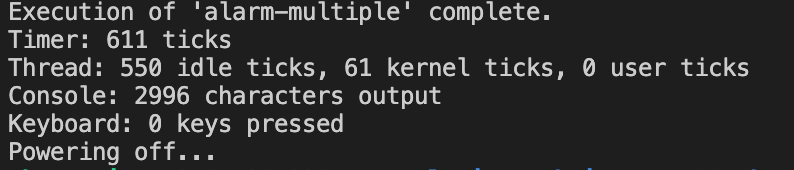
🔑 터미널 입력!


아래와 같이 Thread: 550 idle ticks로 변했다면 그만큼 CPU가 놀았다는것! 성공!
🤫 참고 자료 :
한양대 Pintos PPT자료, https://always-be-wise.tistory.com/151
'OS > Pintos' 카테고리의 다른 글
Project2: User Programs(introduction) (0) 2022.01.10 Project1 : Thread - Priority Scheduling(3) (0) 2021.12.30 Project1 : Thread - Priority Scheduling(2) (0) 2021.12.30 Project1 : Thread - Priority Scheduling (1) (0) 2021.12.30 Project1 : Thread - introduction (0) 2021.12.30 - Ready_list : CPU를 기다리는 쓰레드들의 배열